
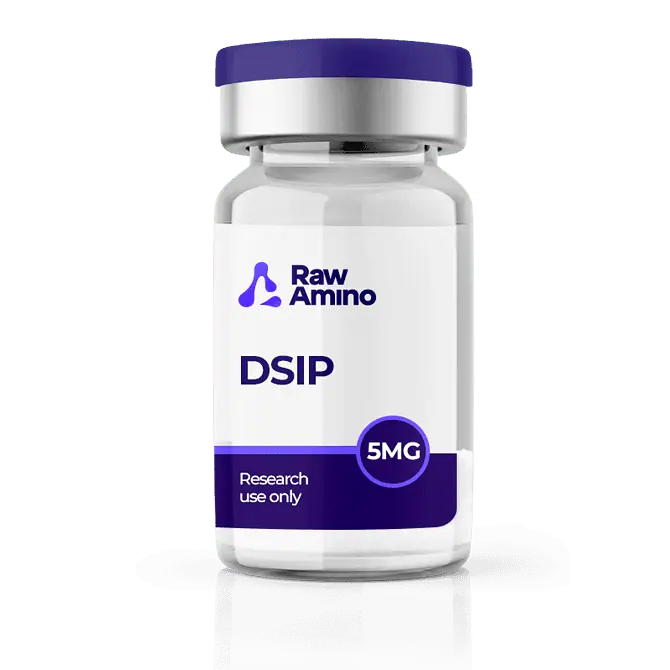
DSIP – 5MG
DSIP 5MG: Benefits, Mechanism, and Research Behind the Delta Sleep-Inducing Peptide
What Is DSIP 5MG?
DSIP 5MG refers to a measured amount of Delta Sleep-Inducing Peptide used in peptide research.
Scientists first identified DSIP during sleep studies focused on brain neurochemistry.
The peptide contains nine amino acids arranged in a compact biological structure.
Researchers associate DSIP primarily with sleep regulation and circadian rhythm balance.
Moreover, laboratories explore DSIP for neurological and metabolic research applications.
Many researchers consider DSIP a regulatory neuropeptide affecting hormone and stress pathways.
Consequently, interest in DSIP continues to expand across sleep and neurobiology studies.
How DSIP Works in the Body
DSIP interacts with brain signaling pathways connected to sleep and stress responses.
Researchers believe the peptide influences neurotransmitters involved in restorative sleep cycles.
Furthermore, DSIP may interact with the hypothalamus and pituitary signaling network.
This interaction potentially affects hormone balance during sleep periods.
Meanwhile, DSIP also appears connected to cortisol regulation and stress adaptation.
Lower cortisol activity often corresponds with improved relaxation and recovery.
Therefore, researchers continue studying DSIP’s potential influence on neuroendocrine balance.
Additionally, the peptide may support neuronal communication in sleep-related brain regions.
Potential Benefits Associated With DSIP 5MG
Research literature highlights several biological effects linked to DSIP activity.
First, many studies examine DSIP for its connection to improved sleep quality.
Balanced sleep cycles often support overall neurological health.
Moreover, deeper sleep phases contribute to recovery and cognitive restoration.
Researchers also explore DSIP for possible stress reduction properties.
Stress modulation remains essential for maintaining mental and physical balance.
Furthermore, DSIP may influence cortisol rhythms during nighttime rest.
Balanced cortisol levels often support improved sleep onset and stability.
Another research focus involves potential pain perception modulation.
Some experimental findings suggest DSIP may influence neural pain signaling pathways.
Consequently, scientists continue analyzing DSIP in neurological and recovery studies.
Additionally, researchers investigate its relationship with circadian rhythm regulation.
DSIP and Sleep Regulation Research
Sleep remains the most widely studied function linked to DSIP activity.
Scientists originally discovered DSIP during experiments involving induced sleep states.
Therefore, the peptide gained attention as a possible sleep-regulating messenger.
Laboratory studies show DSIP may influence slow-wave sleep phases.
Slow-wave sleep supports tissue repair and brain detoxification processes.
Moreover, deep sleep improves cognitive clarity and daily energy levels.
Researchers continue examining DSIP interactions with melatonin and circadian regulators.
Meanwhile, ongoing studies explore how DSIP affects REM and non-REM sleep cycles.
DSIP and Stress Adaptation
Stress response regulation represents another important research direction for DSIP.
The peptide appears linked to neurochemical pathways controlling stress hormones.
Furthermore, DSIP may influence the body’s adaptation to prolonged stress exposure.
Balanced stress responses often protect neurological and immune health.
Consequently, scientists analyze DSIP within broader neuroendocrine regulation studies.
Additionally, DSIP may help stabilize biological rhythms disrupted by chronic stress.
Scientific Interest in DSIP 5MG Dosage
The 5MG designation indicates a commonly referenced research quantity of the peptide.
Researchers often evaluate different peptide concentrations to observe biological responses.
However, dosage relevance depends heavily on laboratory conditions and study design.
Therefore, controlled environments remain essential for accurate peptide experimentation.
Scientists emphasize that DSIP research continues to evolve through ongoing investigation.
Safety and Research Considerations
DSIP remains primarily a compound investigated in scientific research environments.
Researchers carefully evaluate peptide stability, absorption, and metabolic breakdown.
Moreover, long-term biological effects require further controlled clinical investigation.
Responsible research practices ensure accurate data and safe laboratory conditions.
Consequently, scientists emphasize evidence-based analysis before drawing firm conclusions.
The Future of DSIP Peptide Research
Interest in peptide science continues growing across biomedical and neurological fields.
DSIP remains a promising candidate within sleep and neuroregulatory research programs.
Furthermore, modern peptide technology enables deeper molecular analysis than earlier studies allowed.
Advanced laboratory tools now reveal more detailed peptide-receptor interactions.
Therefore, future research may clarify DSIP’s precise biological functions.
Meanwhile, scientists continue studying how DSIP interacts with sleep, stress, and circadian systems.
Continued exploration will likely expand understanding of neuropeptides in human physiology.

Reviews
There are no reviews yet.