
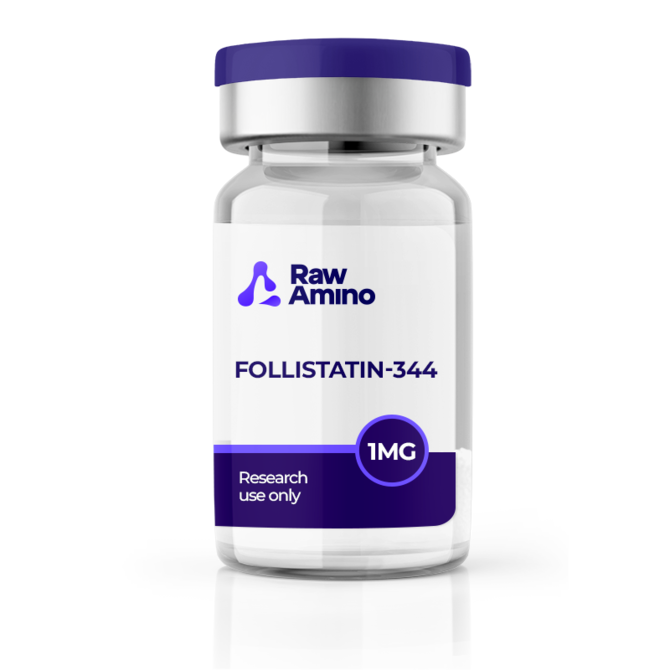
Follistatin-344 – 1MG
Follistatin-344 1MG Benefits: Muscle Growth, Recovery, and Performance Optimization
What Is Follistatin-344?
Follistatin-344 is a bioactive peptide known for regulating muscle development and cellular growth.
It functions by binding to proteins that limit muscle formation in the body.
Therefore, researchers often study it in relation to physical performance and tissue repair.
Additionally, the peptide belongs to the follistatin protein family found naturally in human biology.
Scientists identify its primary role in regulating signaling pathways that influence muscle size.
Consequently, interest in Follistatin-344 continues to grow in performance and research communities.
Moreover, its unique mechanism separates it from many conventional peptides.
How Follistatin-344 Supports Muscle Development
Follistatin-344 interacts with myostatin, a protein that restricts muscle growth.
When follistatin binds to myostatin, muscle cells gain greater potential for development.
As a result, researchers observe enhanced muscle formation in controlled studies.
Furthermore, muscle fibers may grow larger when growth inhibition decreases.
This mechanism supports interest among athletes and performance researchers.
Meanwhile, the peptide may influence muscle differentiation and regeneration pathways.
Consequently, muscle tissues may respond faster to training stress.
Additionally, enhanced protein synthesis may occur during recovery phases.
Therefore, Follistatin-344 attracts attention in advanced muscle biology research.
Recovery and Regeneration Advantages
Efficient recovery plays a major role in athletic performance and training consistency.
Follistatin-344 may influence cellular repair mechanisms after intense physical stress.
For example, muscle fibers often require rapid regeneration following heavy resistance training.
Therefore, improved signaling pathways may support tissue rebuilding processes.
Moreover, the peptide may contribute to reduced downtime between workouts.
Athletes constantly seek faster recovery cycles for consistent performance gains.
Similarly, bodybuilders often research compounds that assist muscular regeneration.
Consequently, Follistatin-344 remains an interesting peptide for recovery-focused studies.
Potential Effects on Strength and Performance
Strength improvements usually follow consistent muscle development and efficient recovery.
Follistatin-344 may indirectly influence these performance factors.
First, larger muscle fibers may produce greater contractile force.
Next, improved recovery cycles allow more frequent training sessions.
Furthermore, better muscle repair supports sustained strength progression.
Additionally, researchers explore its effects on endurance and muscular resilience.
Meanwhile, athletes investigate how peptide signaling affects training adaptation.
Therefore, Follistatin-344 continues to generate interest in sports science discussions.
Role in Body Composition Research
Body composition involves the balance between lean muscle mass and body fat.
Researchers often examine peptides that influence lean tissue development.
Follistatin-344 may contribute to increases in lean muscle mass.
Consequently, overall body composition may shift toward a more muscular profile.
Additionally, improved muscle development often supports metabolic efficiency.
Moreover, increased muscle tissue may raise resting metabolic activity.
As a result, energy utilization patterns can change over time.
Meanwhile, ongoing studies evaluate these potential metabolic implications.
Thus, Follistatin-344 remains a valuable subject in body composition research.
Mechanism of Action in Cellular Signaling
Follistatin-344 works through complex biological signaling pathways.
Specifically, it binds to myostatin and activin proteins within muscle tissues.
These proteins normally regulate and limit cellular growth processes.
However, follistatin prevents these molecules from blocking muscle development.
Consequently, muscle cells may experience enhanced growth signaling.
Furthermore, this interaction influences several cellular differentiation pathways.
Researchers also analyze its relationship with satellite cell activation.
Satellite cells play essential roles in muscle repair and regeneration.
Therefore, understanding follistatin signaling helps explain its biological interest.
Why Follistatin-344 Attracts Research Attention
Scientists constantly explore molecules that regulate muscle development.
Follistatin-344 offers a unique biological mechanism for such investigations.
Unlike typical growth compounds, it targets inhibitory pathways.
Therefore, it modifies how muscles respond to natural growth signals.
Additionally, its molecular structure allows interaction with several regulatory proteins.
Moreover, ongoing research continues to examine its potential applications.
Meanwhile, biotechnology advancements improve peptide synthesis and stability.
Consequently, interest in follistatin peptides steadily expands.
Key Considerations in Peptide Research
Peptide studies require careful scientific evaluation and controlled conditions.
Researchers analyze dosage, purity, and biological stability during experiments.
Additionally, laboratory environments help determine how peptides behave in biological systems.
Furthermore, long-term research helps identify safety and effectiveness profiles.
Meanwhile, biotechnology companies continue developing advanced peptide technologies.
Consequently, the scientific understanding of peptides continues to evolve.
Therefore, researchers approach compounds like Follistatin-344 with structured investigation methods.
Final Overview of Follistatin-344 1MG
Follistatin-344 represents an intriguing peptide within modern biological research.
It primarily attracts attention due to its interaction with muscle-growth inhibitors.
Therefore, scientists explore its role in muscle development and regeneration pathways.
Additionally, its signaling mechanisms support interest in performance and recovery studies.
Moreover, body composition researchers analyze its influence on lean tissue growth.
Meanwhile, cellular biology research continues uncovering its broader biological roles.
Consequently, Follistatin-344 remains a compelling subject in peptide science.
Overall, its unique molecular activity keeps it at the center of ongoing investigation.


Reviews
There are no reviews yet.